Ontario summer camp transportation requires careful planning, especially when organizers are responsible for moving groups of children safely, efficiently, and on schedule. Whether you operate a day camp, sports camp, church camp, recreation program, private school camp, or municipal summer program, transportation can have a major impact on the success of the camp experience.
For many camps, school buses are one of the most practical and cost-effective ways to transport campers. They are built for group transportation, familiar to families, and well suited for short-to-medium-distance travel across Ontario. With the right planning, bus transportation can help simplify logistics, improve supervision, and create a smoother experience for campers, parents, and staff.
Did you know? At Switzer-CARTY Transportation, we help Ontario camps, schools, recreation groups, and community organizations plan safe, reliable bus transportation for day trips, recurring routes, and private group travel. Learn more about our school bus rental and charter services.
Why Transportation Planning Matters for Summer Camps
Summer camp transportation is about more than simply getting from one place to another. For camp directors and program coordinators, transportation affects timing, safety, parent communication, staffing, budgeting, and the overall camper experience.
A late bus, unclear pickup plan, or poorly organized route can create unnecessary stress for staff and families. On the other hand, a well-planned transportation schedule helps the day run more smoothly from the moment campers arrive.
Camp transportation may be needed for:
- Daily pickup and drop-off routes
- Field trips
- Swimming, park, or conservation area visits
- Sports facilities
- Museum or science centre outings
- Church or community group camps
- Overnight camp transfers
- Specialty camp programming
Because summer programs often run on tight schedules, planning transportation early is one of the best ways to avoid last-minute issues.
Why School Buses Work Well for Camp Transportation
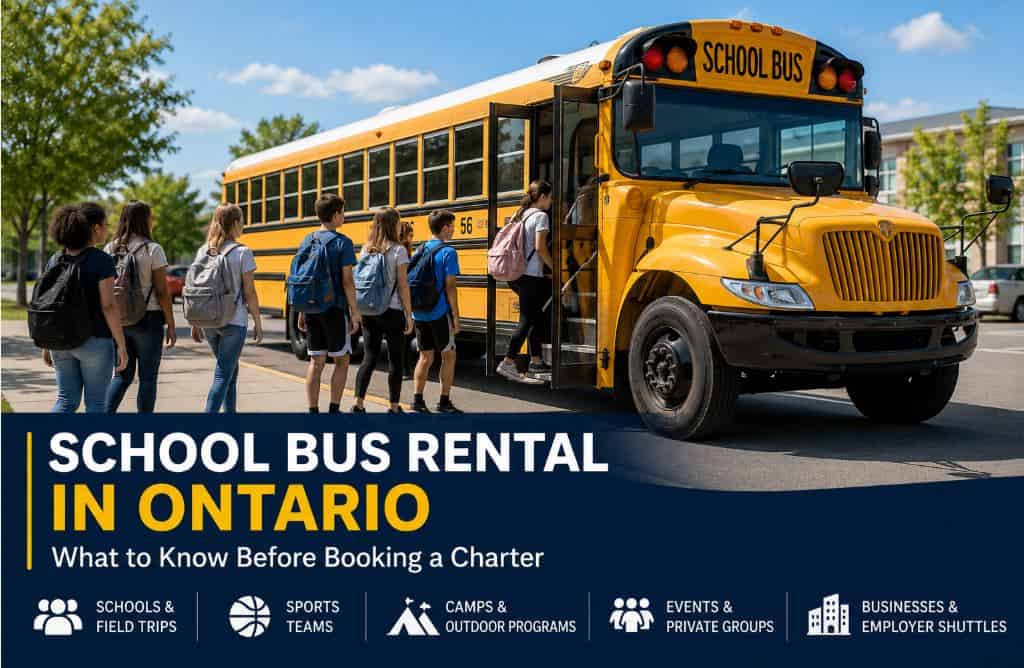
For many Ontario summer camps, school buses are the most practical option. They offer high passenger capacity, strong safety design, and a familiar group travel experience.
School buses are especially useful for:
- Day camps
- Local field trips
- Municipal recreation programs
- Sports camps
- Youth groups
- Camp shuttles
- Short-to-medium-distance travel
Transport Canada outlines school bus safety standards related to design and construction, including features such as stop signal arms, emergency exits, lighting, mirrors, and crash protection standards. This makes school buses a trusted option for transporting children and youth in organized group settings.
Start Planning Early
Summer is a busy season for transportation providers. Camps, schools, sports teams, community groups, wedding parties, seniors’ groups, and private event organizers may all be booking buses during the same period.
Booking early gives camp organizers more flexibility with:
- Vehicle availability
- Pickup times
- Route planning
- Multi-day scheduling
- Special requirements
- Budgeting
For camps that need recurring transportation throughout the summer, early booking is especially important. A recurring route or weekly field trip schedule may require consistent driver and vehicle availability.
Match the Bus Type to the Trip
Not every camp outing requires the same vehicle. Choosing the right bus type helps control costs while supporting comfort and safety.
School Buses
School buses are often the best fit for shorter camp trips, daily shuttles, local outings, and larger camper groups. They are practical, cost-effective, and designed for group transportation.
Minibuses
Minibuses can be helpful for smaller groups, staff transportation, specialty programs, or trips where a full-size bus is not required.
Coach Buses
Coach buses may be more suitable for longer-distance camp travel where additional comfort, luggage space, or onboard amenities are needed.
The goal is to choose the vehicle that fits the group size, trip distance, and camper needs without overpaying for features that are not necessary.
Build a Clear Pickup and Drop-Off Plan
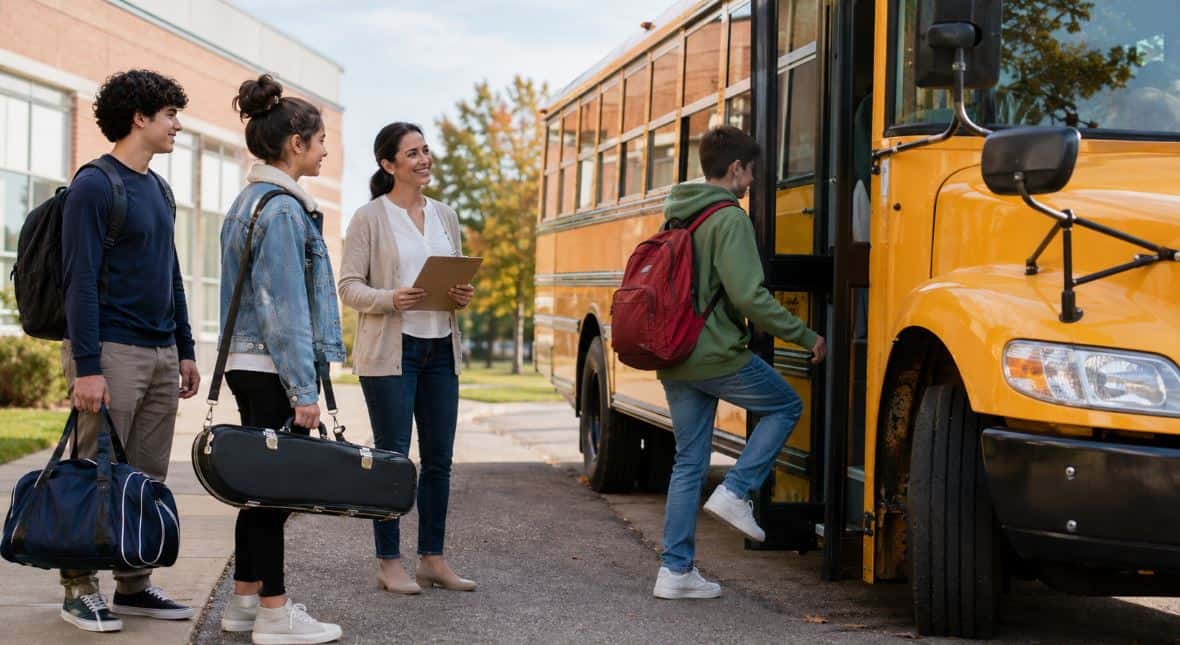
A strong transportation plan starts with clear pickup and drop-off details. Camps should identify exactly where campers will board and exit the bus, how staff will supervise the process, and how parents will be informed.
Important questions include:
- Where will the bus safely load and unload?
- Is there enough space for the bus to pull in and out?
- Will parents be dropping children off at the same time?
- Who is responsible for attendance checks?
- How will staff handle late arrivals?
- What is the backup plan for delays?
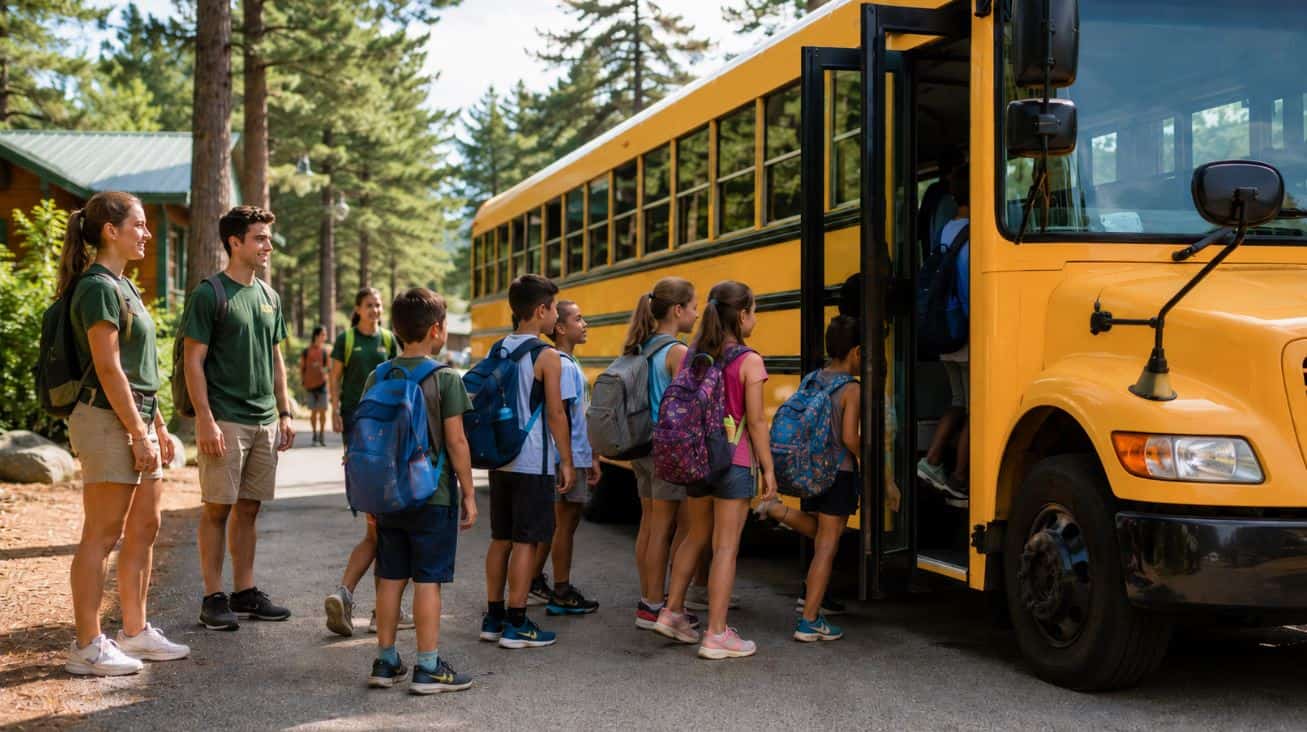
Ontario’s school bus safety guidance emphasizes safe behaviour around buses, including stopping rules and the importance of caution when children are boarding or leaving a bus. Camp staff should treat loading and unloading as one of the most important parts of the trip, not just a quick transition.
Assign Staff Roles Before the Trip
Good supervision is essential for camper transportation. Before the trip begins, camp leaders should assign clear roles to staff.
This may include:
- One staff member managing attendance
- One staff member supervising boarding
- One staff member seated near the front
- One staff member seated near the back
- One staff member responsible for emergency contact information
- One staff member coordinating with the driver
For younger campers, supervision should be especially structured. Staff should know which campers are on the bus, where they are seated, and who is responsible for checking that everyone exits at the destination.
Keep Attendance Procedures Simple and Consistent
Camp transportation requires accurate headcounts. A missed attendance check can create serious stress and safety concerns.
A good process should include:
- A roster before boarding
- A headcount once campers are seated
- A second count when leaving the bus
- A final count before departure from the destination
- Clear communication between staff members
For recurring camp routes, consistency matters. Using the same checklist each time helps reduce confusion and ensures staff are not relying on memory.
Plan for Camp Gear and Supplies
Summer camp trips often involve more than campers. You may also need space for backpacks, coolers, sports equipment, craft supplies, life jackets, medical kits, or program materials.
Before booking, consider:
- How many campers are travelling?
- What supplies are coming with them?
- Will equipment need separate storage?
- Are lunches or coolers being transported?
- Will campers have large bags?
School buses are excellent for passenger movement, but storage is more limited than on a coach bus. If the trip involves bulky gear, discuss this early so the transportation plan fits the actual needs of the outing.
Communicate Clearly With Parents
Parents want to know that transportation is organized and safe. Clear communication can reduce questions and build confidence.
Before the trip, provide details such as:
- Pickup and drop-off times
- Location details
- What campers should bring
- Whether food or drinks are allowed
- Expected return time
- Emergency contact process
- What happens if the bus is delayed
For recurring camp transportation, it may help to send one transportation overview at the start of the season and reminders before major outings.
Think About Accessibility and Special Needs
Campers may have different physical, sensory, medical, or developmental needs. Transportation planning should account for those needs early.
Consider whether any campers require:
- Extra boarding time
- Mobility support
- Medication access
- A quieter seating area
- Close staff supervision
- Accessible transportation
Discussing these needs before the trip helps avoid last-minute complications and ensures a more inclusive camp experience.
Budgeting for Summer Camp Bus Rentals
Transportation is often one of the largest logistical costs for camps, but planning can help manage the budget.
Factors that may affect cost include:
- Distance travelled
- Total hours required
- Number of buses needed
- Date and time of travel
- Number of pickup/drop-off points
- Waiting time
- Recurring vs. one-time bookings
To help control costs, camps can often save by consolidating pickup locations, reducing unnecessary stops, booking early, and choosing the right vehicle for the trip.
Common Mistakes to Avoid
Camp transportation problems often come from small planning gaps. Common mistakes include:
- Booking too late
- Underestimating travel time
- Not allowing time for loading and unloading
- Forgetting about gear and supplies
- Having unclear staff roles
- Using too many pickup points
- Not confirming destination access for buses
- Failing to communicate timing clearly to parents
Avoiding these issues can make transportation smoother and reduce stress on camp staff.
Choosing the Right Transportation Partner
A reliable transportation provider should help you think through more than the vehicle. The right partner can help with timing, route planning, vehicle selection, and practical considerations for children’s group transportation.
When choosing a provider, look for:
- Experience with schools and youth groups
- Familiarity with Ontario routes and venues
- Properly maintained vehicles
- Professional drivers
- Clear communication
- Ability to support recurring camp schedules
- Flexibility for different trip types
For camp organizers, the right transportation partner can become an important part of a safe and well-run summer program.
Making Summer Camp Travel Easier for Everyone
Summer camp should feel exciting, organized, and safe for campers and families. Transportation plays a major role in making that happen no matter your camp destination.
By booking early, choosing the right bus type, assigning staff roles, planning pickup and drop-off procedures, and communicating clearly with parents, Ontario camp organizers can create a smoother transportation experience from start to finish.
Whether your camp is planning daily routes, weekly outings, or one-time field trips, reliable bus transportation can help keep the focus where it belongs: on creating a fun, memorable, and safe summer experience for campers.