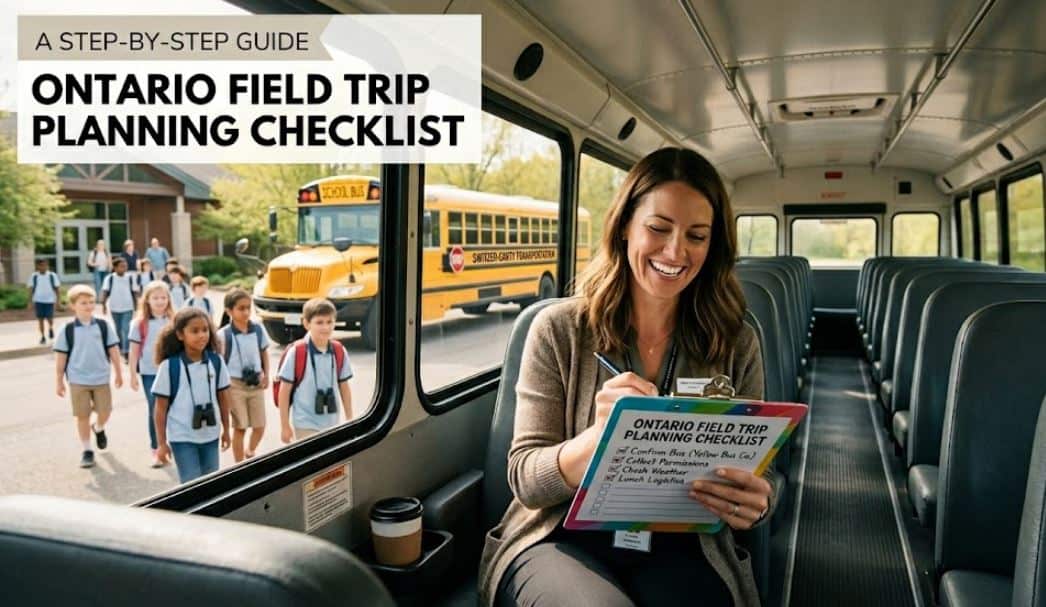
Planning a school field trip can feel overwhelming. Between securing approvals, organizing transportation, confirming supervision ratios, and managing permission forms, there are many moving parts. A clear, structured checklist helps ensure nothing is missed—and that students have a safe, smooth experience.
Whether you’re organizing a local museum visit, a sports tournament, or a multi-hour excursion across Southern Ontario, following a step-by-step plan reduces stress and improves outcomes.
Did you know? Switzer-CARTY Transportation supports schools across Southern Ontario with reliable and safety-focused student transportation for field trips and extracurricular events. You can learn more about booking options through their school bus charter services page.
Step 1: Define the educational purpose
Every field trip should clearly connect to curriculum goals or enrichment objectives. Documenting the learning outcomes helps with administrative approval and parent communication.
Ask yourself:
- What curriculum outcomes does this trip support?
- Is it experiential, observational, or interactive?
- What follow-up classroom work will reinforce learning?
Clarity at this stage makes later approvals much easier.
Step 2: Obtain administrative approval
Before confirming vendors or transportation, seek approval from your principal or board following your school’s policy. Most boards require documentation outlining purpose, destination, supervision, and safety planning.
The Ontario Ministry of Education provides general guidance around student safety and supervision expectations. Review Ontario school safety guidelines.
Step 3: Confirm transportation early
Transportation is one of the most time-sensitive components of field trip planning. Peak months such as May, June, and early fall book quickly.
When arranging transportation, confirm:
- Date and departure/return times
- Pickup and drop-off locations
- Number of students and staff
- Special equipment or accessibility needs
- Emergency contact procedures
Booking early helps ensure availability and avoids last-minute adjustments.
Step 4: Arrange supervision and ratios
Determine appropriate supervision levels based on student age and board policy. Assign teachers and parent volunteers early so they can complete required documentation or screening.
Provide chaperones with clear expectations regarding supervision zones, head counts, emergency contacts, and behavioural guidelines.
Step 5: Distribute permission forms
Permission forms should clearly outline:
- Trip purpose and destination
- Transportation details
- Departure and return times
- Emergency contact numbers
- Medical considerations
- Cost breakdown (if applicable)
Set a firm deadline for return to allow enough time to address missing forms before departure.
Step 6: Prepare a safety plan
A safety plan should include:
- Emergency meeting points
- Staff phone contact list
- Student medical alerts
- Contingency planning for delays
Ensure staff know how to reach the transportation provider in case of schedule adjustments.
Step 7: Communicate expectations to students
Before departure day, review expectations with students. Discuss bus behaviour, safety rules, timelines, and respect for the venue.
Clear expectations reduce disruptions and improve the overall experience for everyone involved.
Step 8: Day-of logistics checklist
On the day of the trip, confirm the following:
- Attendance taken before boarding
- Emergency contacts carried by lead teacher
- Student medication accounted for
- Bus arrival time confirmed
- Final head count before departure and return
Having a printed checklist helps ensure consistency even during busy mornings.
After the trip: reinforce learning
Field trips are most effective when reinforced afterward. Encourage reflective discussions, written summaries, or project-based learning tied to the experience.
This strengthens educational value and supports future trip approvals.
Making field trip planning smoother
Organized planning reduces stress for teachers and administrators while improving student safety and engagement. Early booking, clear communication, and structured checklists are key components of a successful excursion.
If you’re preparing an upcoming school trip and want to discuss transportation logistics or availability, you can request a quote online now.